


The Health Discovery Tower project in the Rambam complex, designed by Orit Karin-Moshli Eldar Architects, was designed as an advanced medical environment that combines high functionality with a meticulous and clean architectural language. The design emphasizes the creation of clear, bright and accessible spaces, while precisely matching the requirements of the complex systems with a pleasant and inviting user experience.
Different ceiling and cladding systems were integrated throughout the project, with each area selected a solution tailored to the nature of the activity, the level of accessibility required and the overall design language.
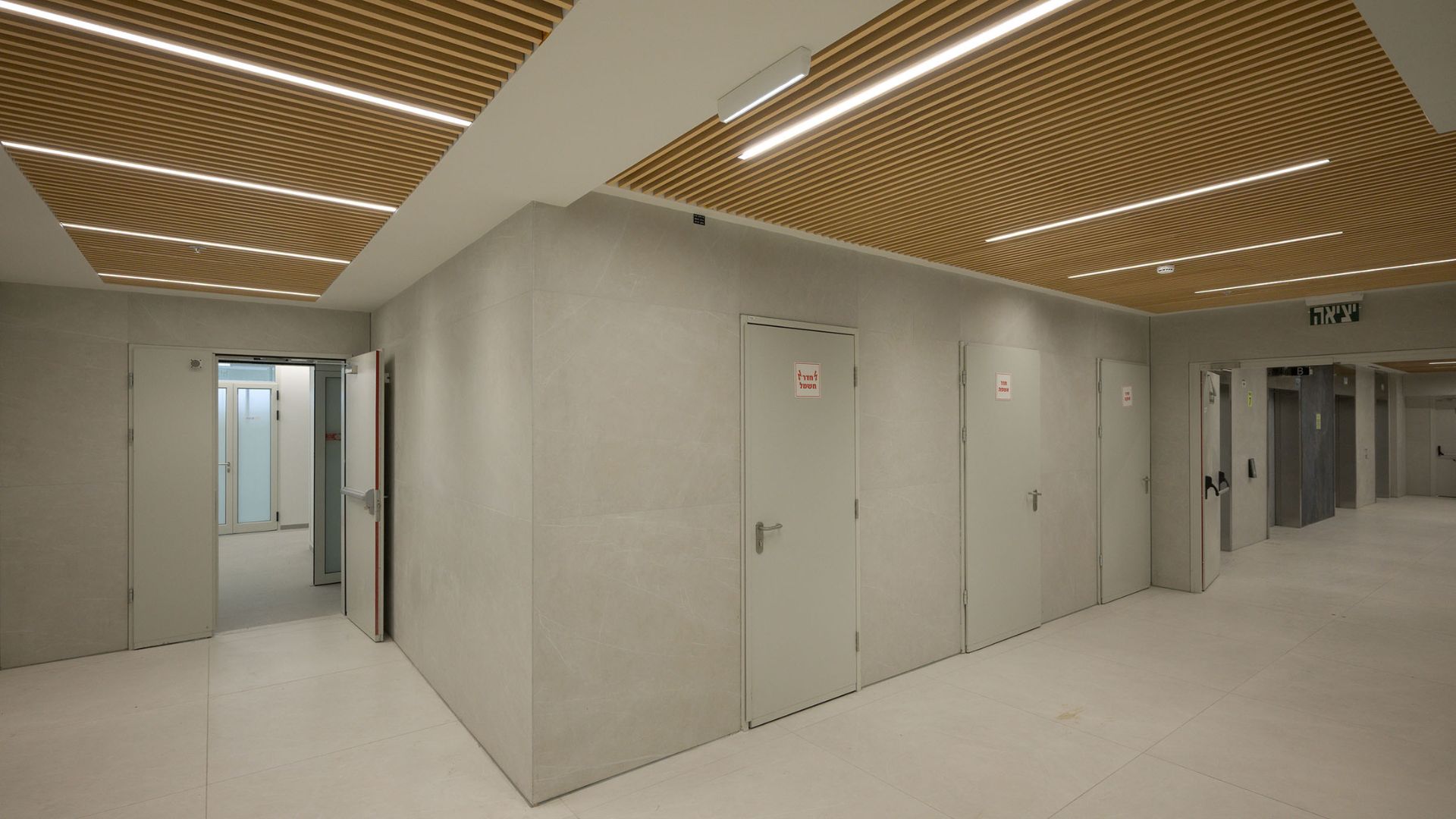
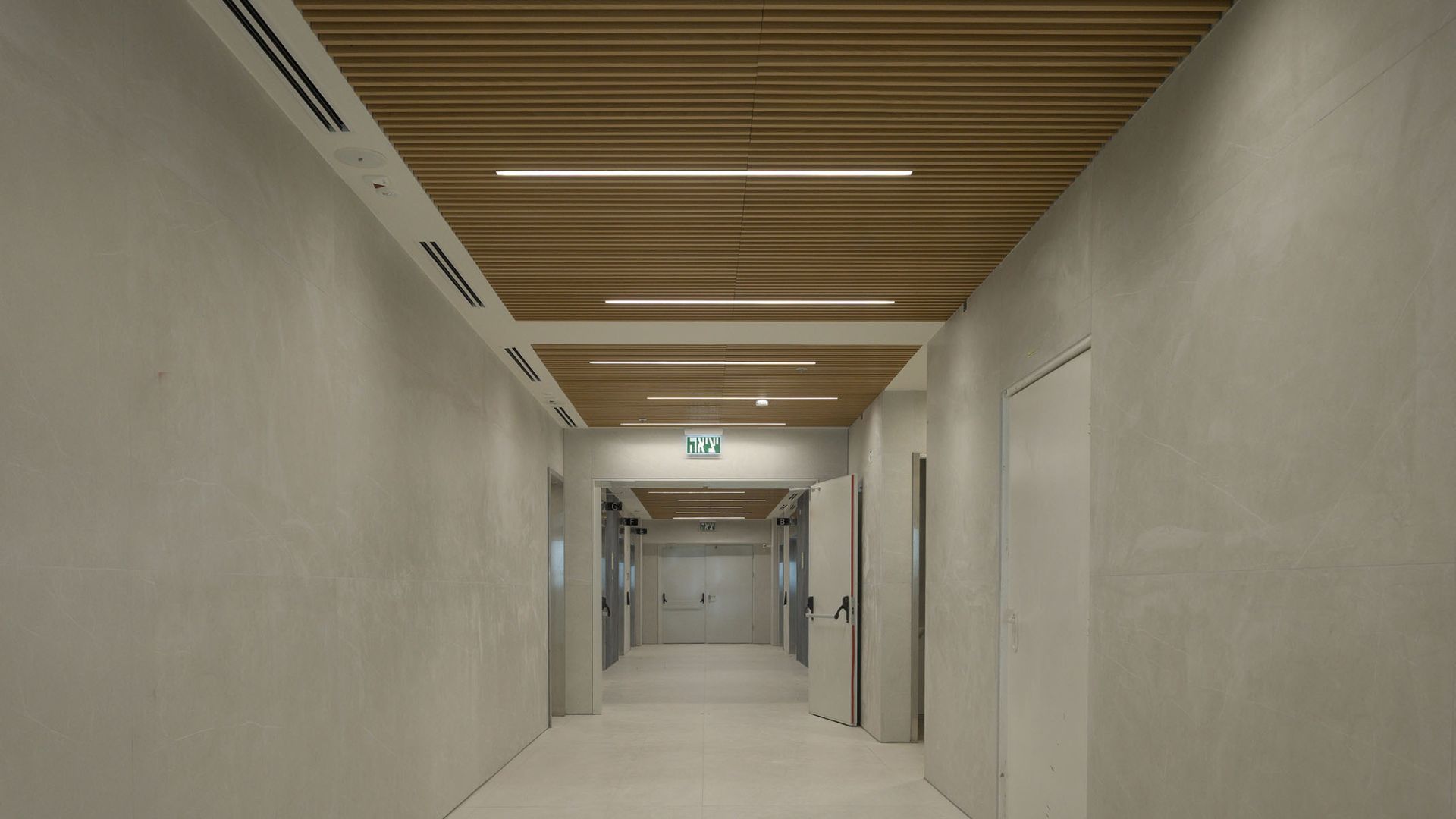
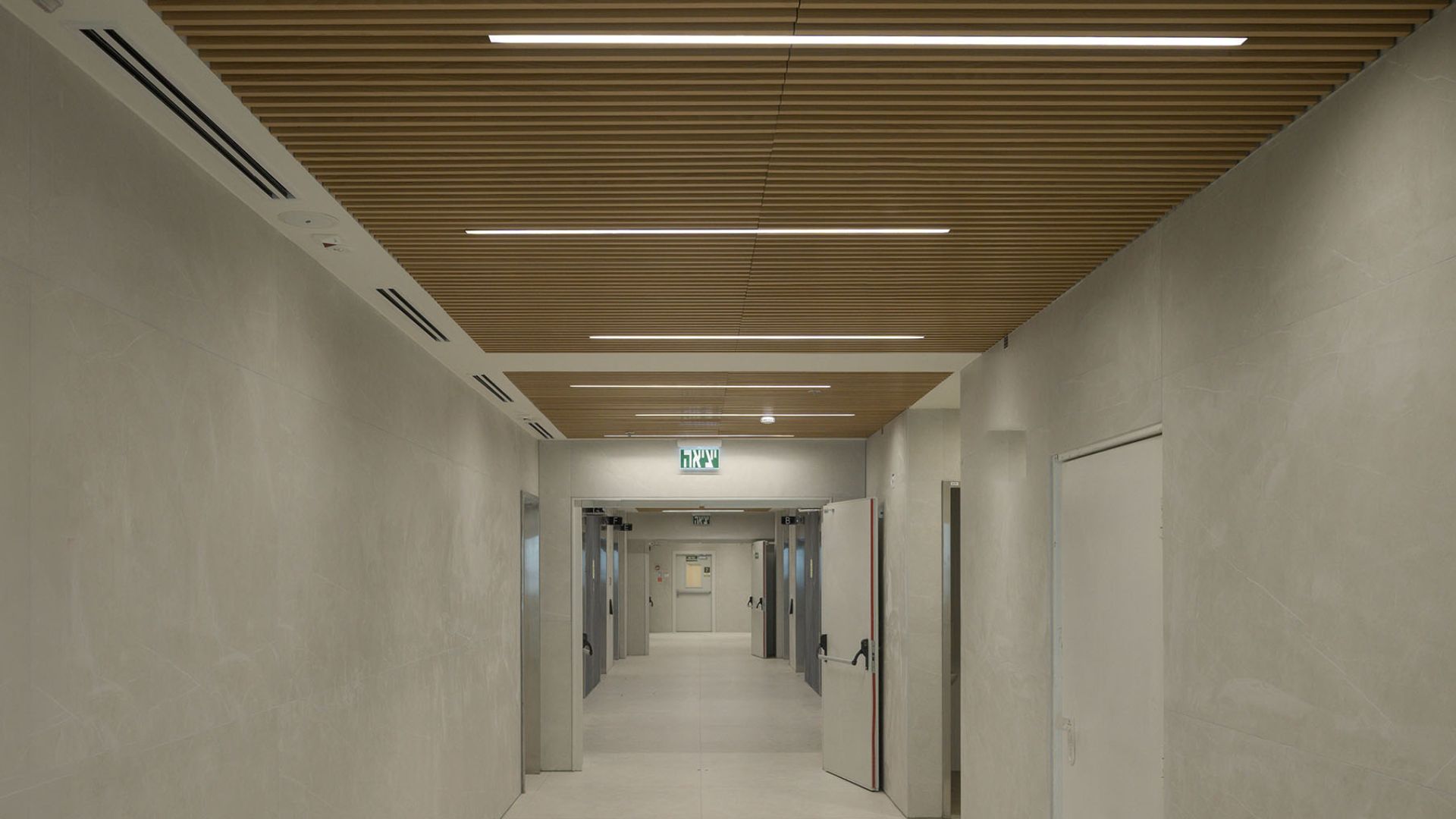
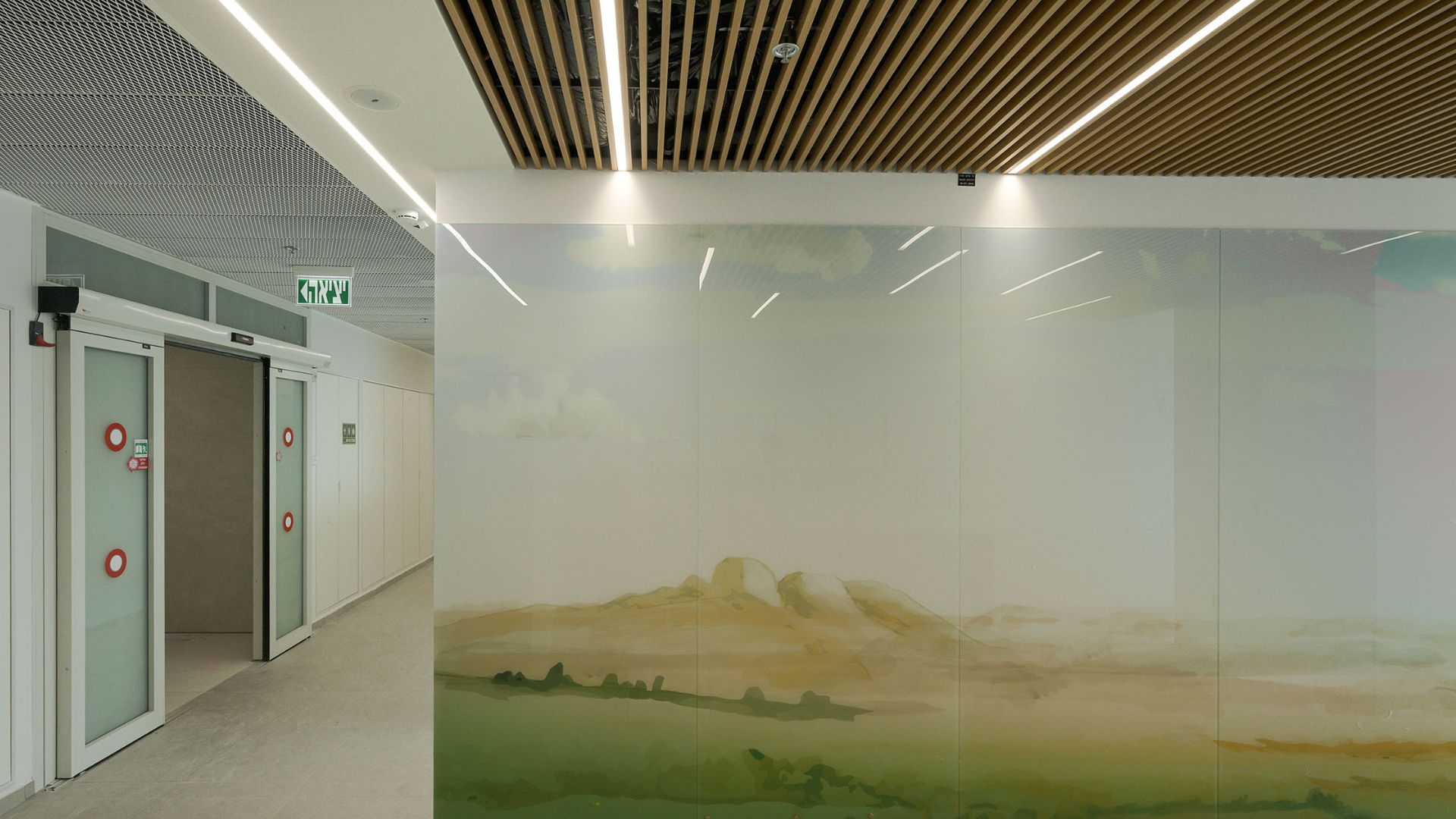
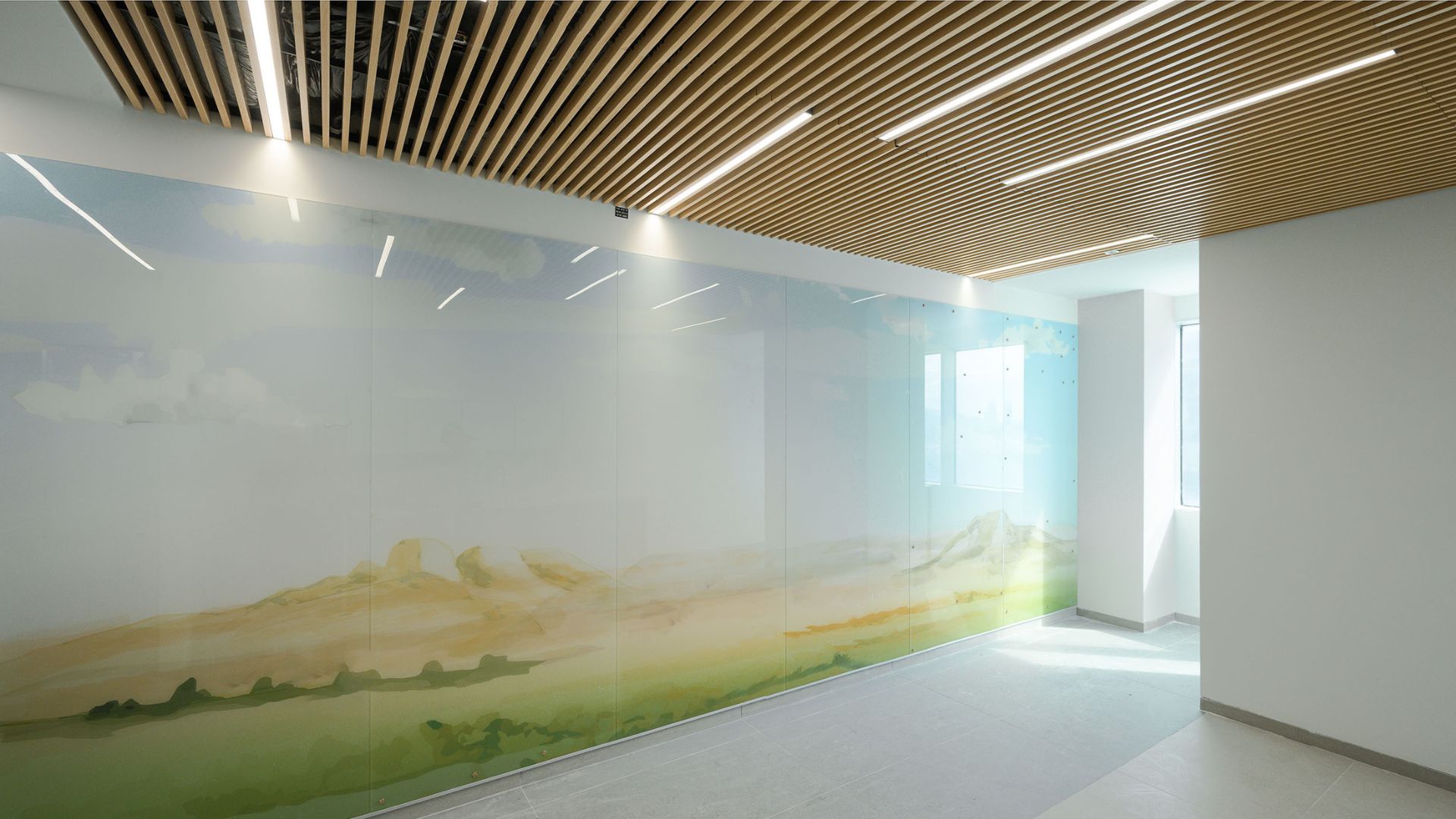
In the lobby and main space, an open Linear Grid (LG) ceiling was selected in an oak wood tone, which gives the space a sense of depth and warmth alongside a modern and airy appearance. The linear beams define a clear ceiling rhythm and allow control of the density and visual presence of the ceiling.
The LG system offers high planning flexibility and unloading, with the option of choosing tile sizes 60/60 and 60/120 cm, as well as a variety of beam heights and widths. The choice of a wood-like shade adds a warm layer of material to a large-scale public space, while maintaining a clean technological appearance.
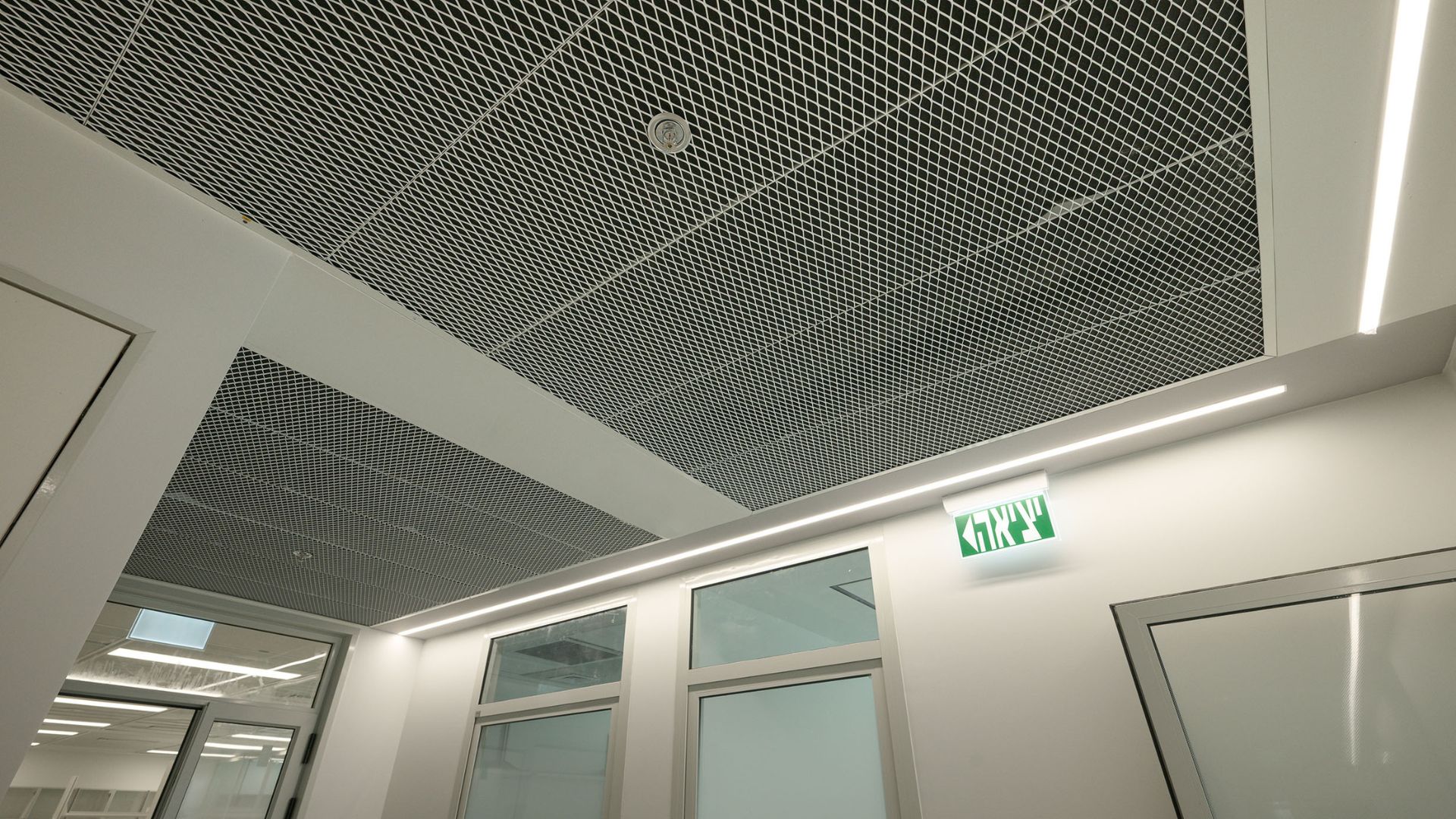
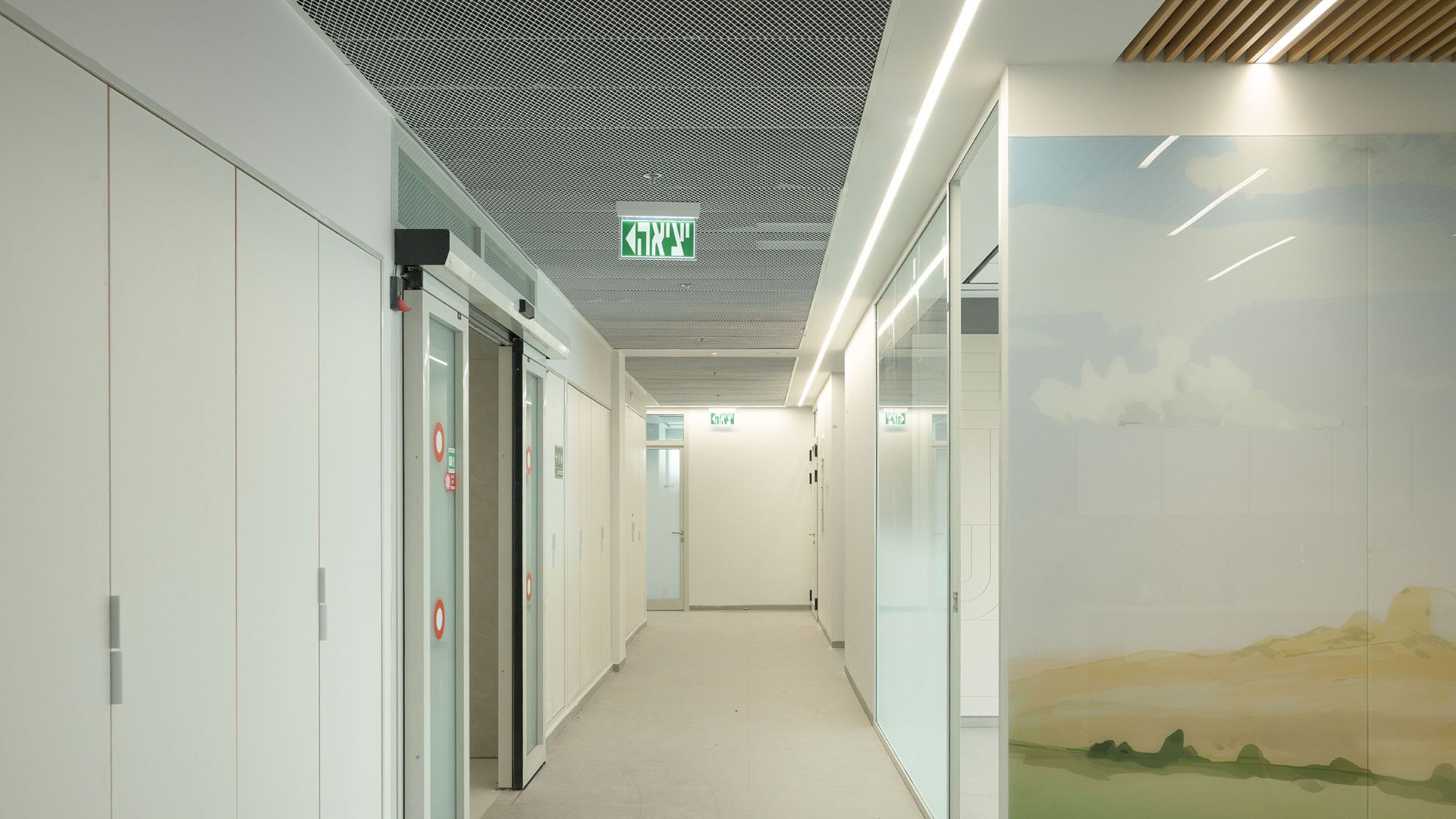
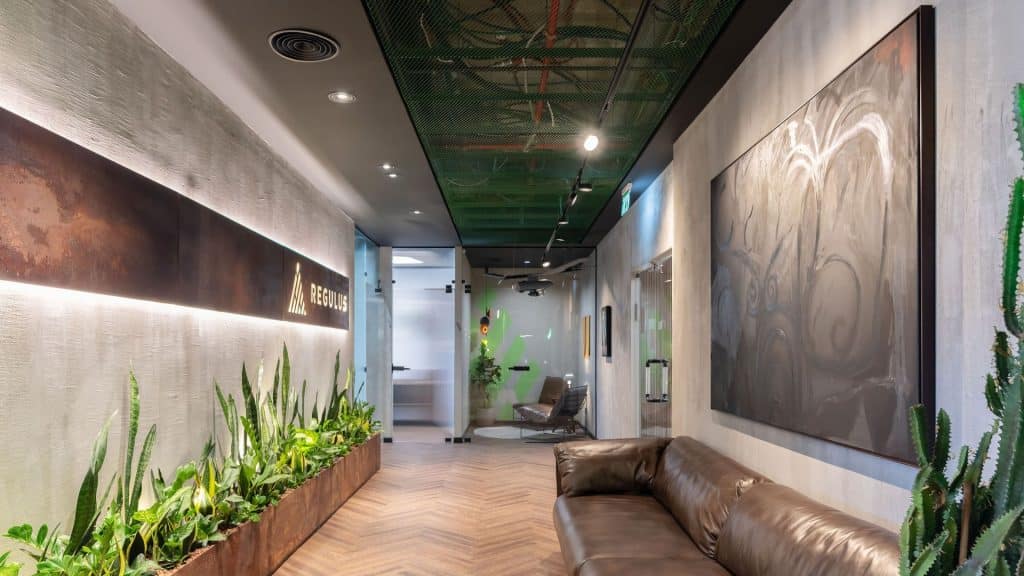
A white expanded mesh ceiling was applied in the corridors and passageways, giving the space a modern industrial character and a feeling of complete openness towards the systems above the ceiling. The mesh panels, made of stretched and galvanized metal, allow for a wide variety of patterns and applications and produce a subtle three-dimensional effect.
In this project, tiles were selected in the Hook-On system in a frameless model, which allows for quick and convenient dismantling for ongoing maintenance of the systems. In addition, a Drop-In system was applied in required locations, connected to the T24 / T15 / Fine Line construction and allowing for an open and continuous appearance.
The ceiling is acoustically neutral, and if necessary, sound-absorbing elements can be integrated above it to improve performance.
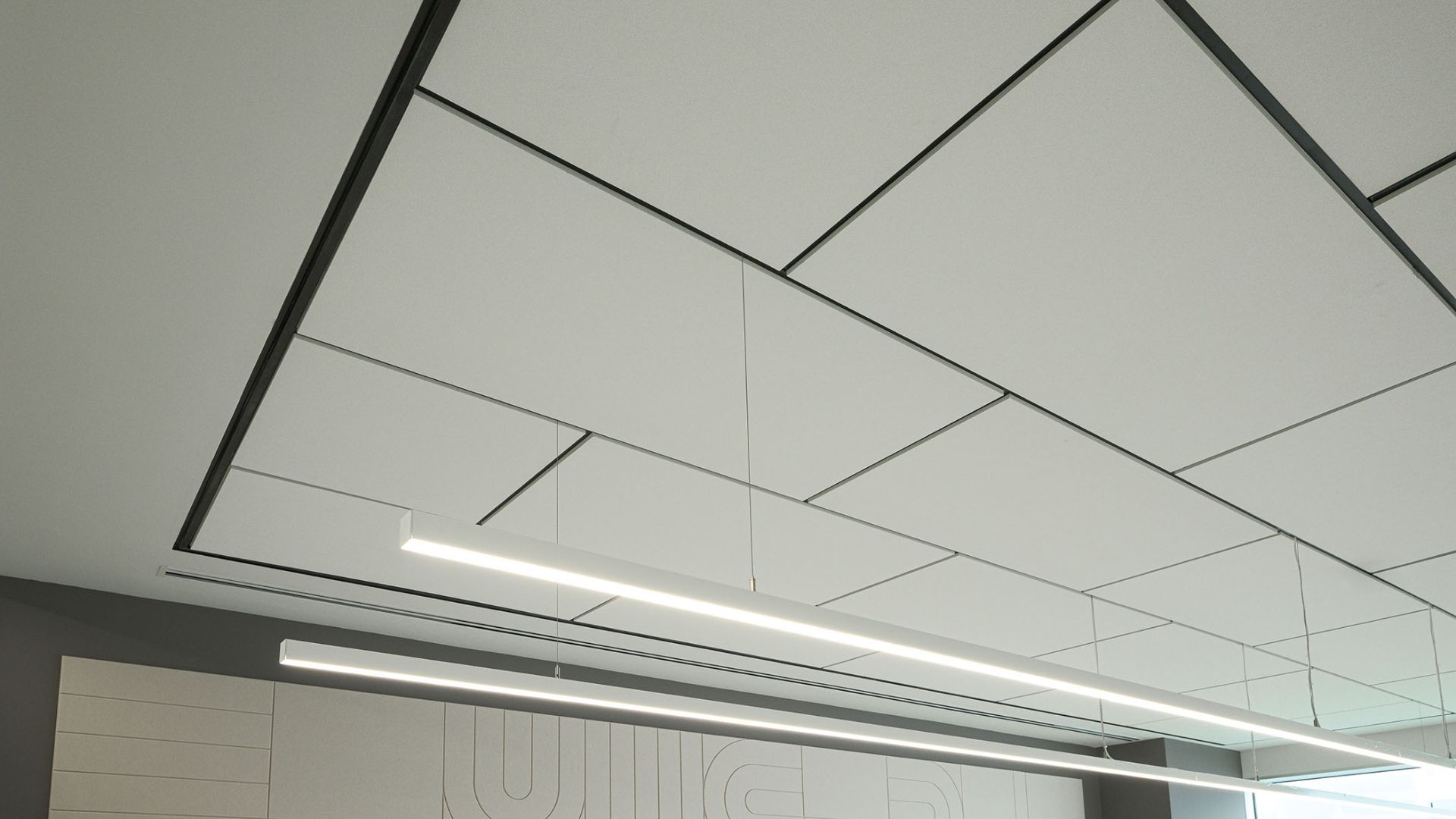
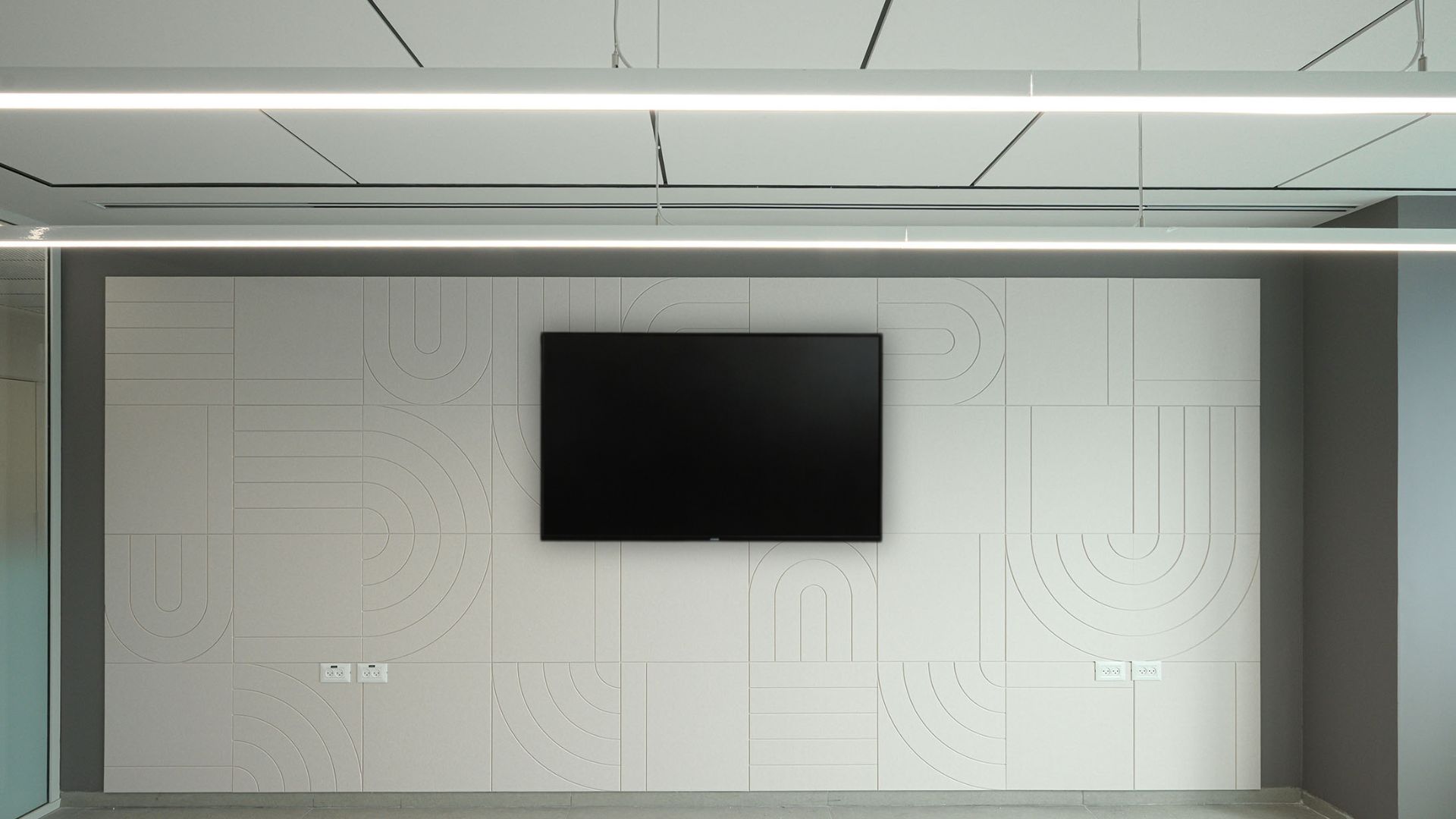
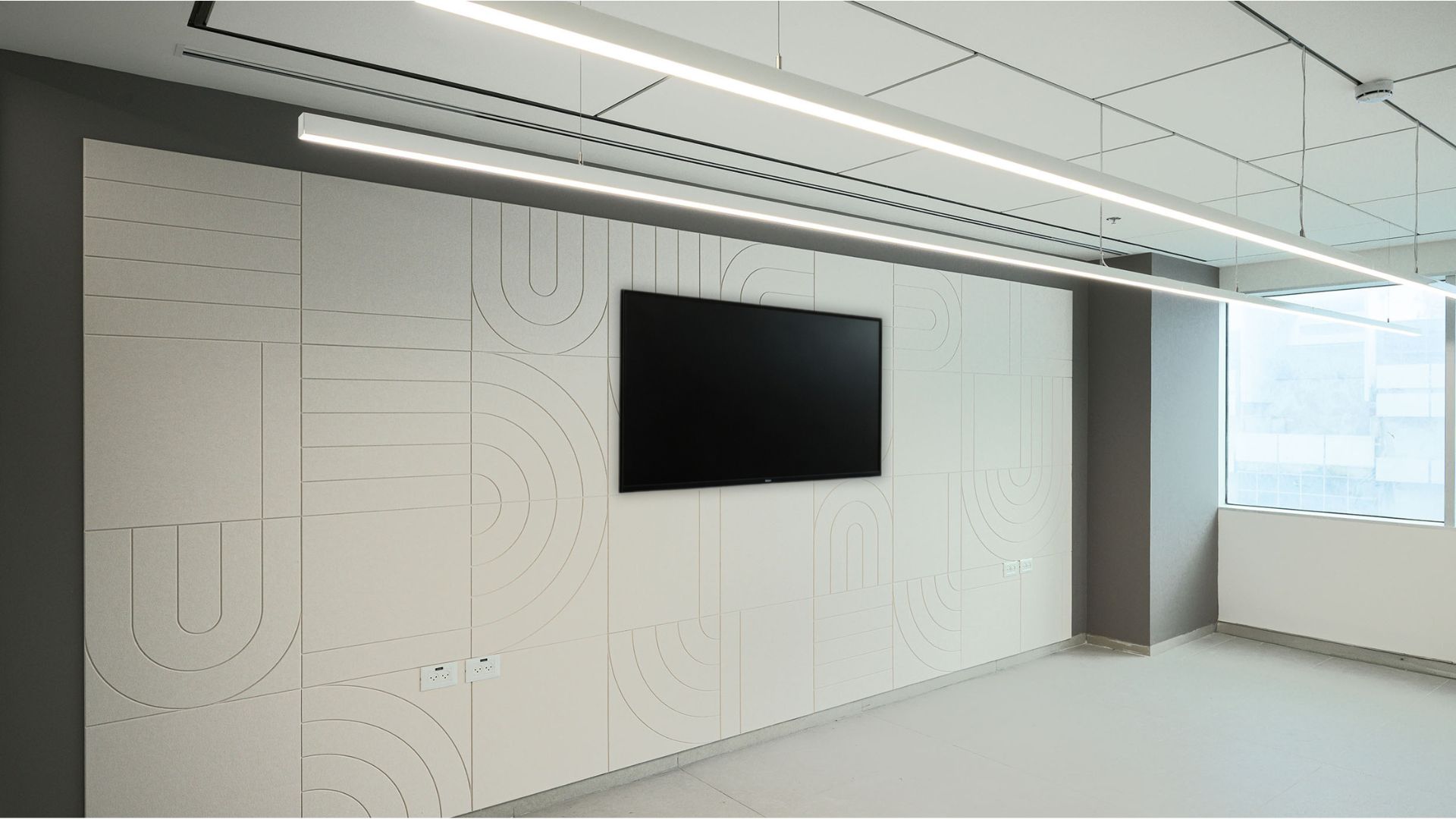
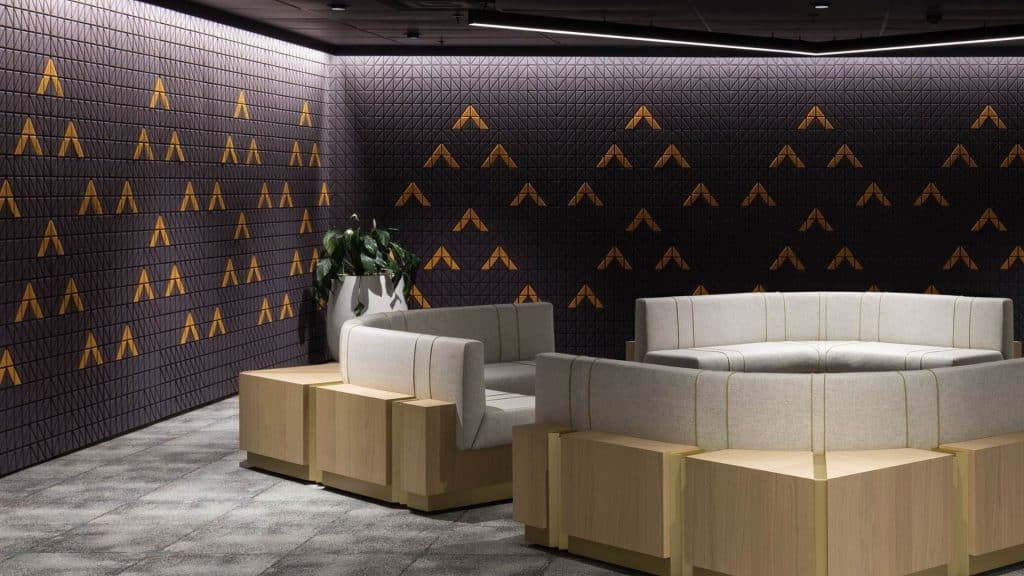
In the training room, a combination of a semi-concealed Nitobo DG acoustic wool ceiling and Groove grooved PET wall cladding from ECOPET was chosen.
Nitobo DG ceiling provides an elegant look with subtle decoupling and high acoustic attenuation (NRC 0.95).
Groove wall cladding, made of grooved polyester (PET), adds a complementary acoustic layer alongside a subtle linear texture. The panels are manufactured with a minimum of 60% recycled material, the cladding is safe to use, contains no adhesives or toxic substances and does not form a substrate for dust mites and is easy to maintain and clean. In addition to acoustic attenuation (up to NRC 0.8), the cladding allows for wide design freedom through a variety of grooves and cuts on demand.
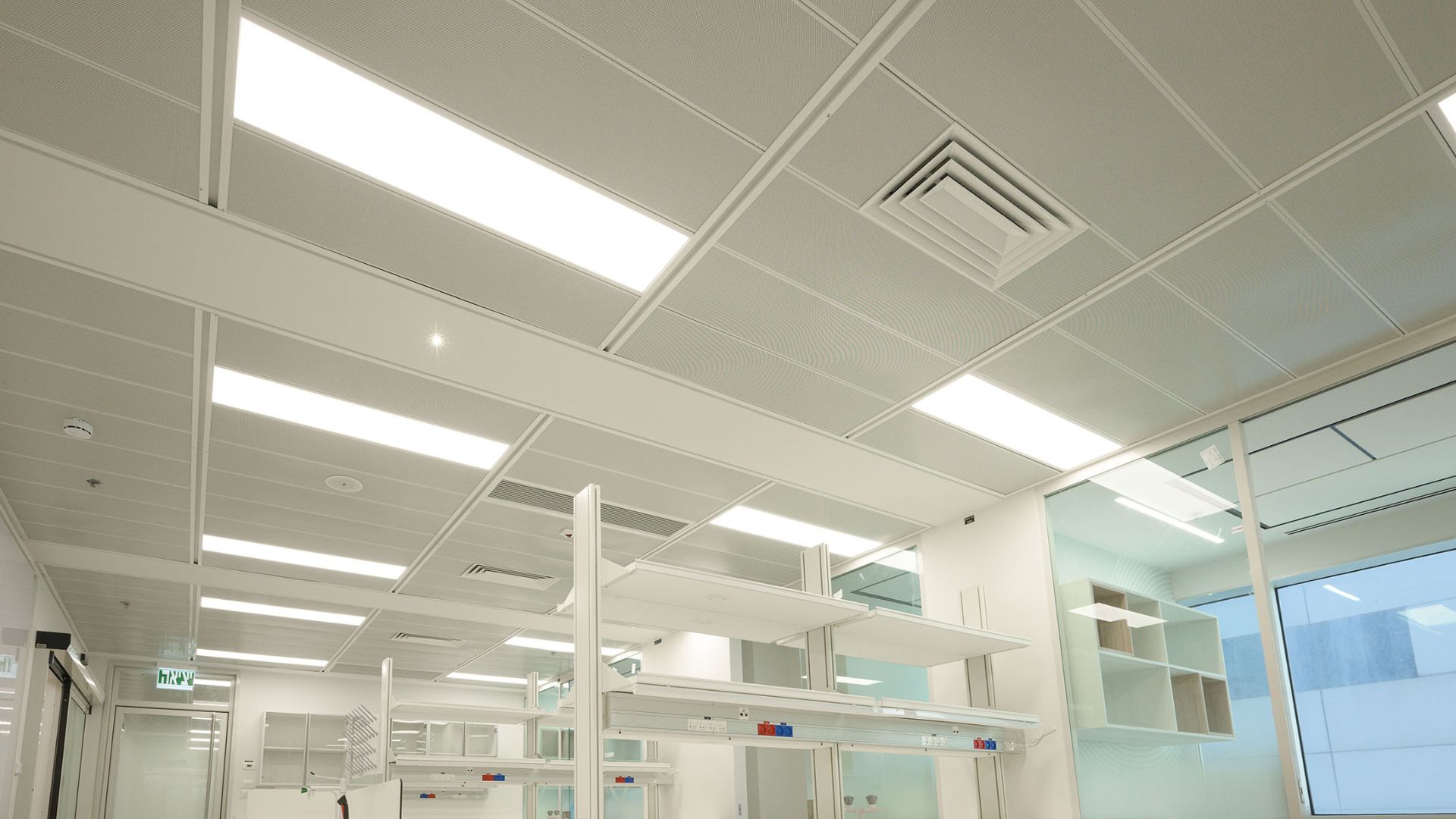
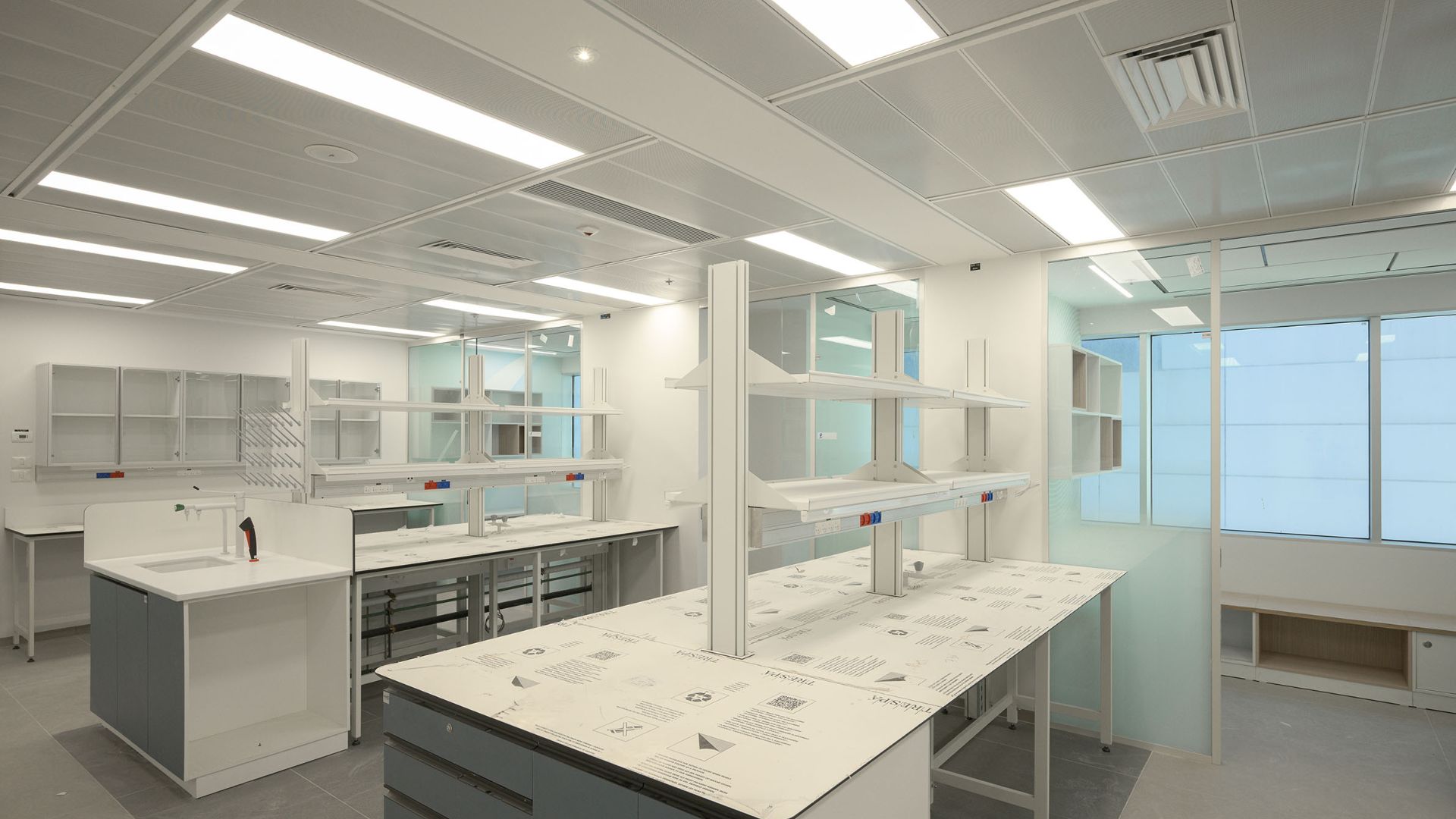
In the laboratories, a perforated metal tray ceiling from Hecht & Efraim was chosen, which combines easy accessibility to overhead systems with broad design flexibility. The trays are manufactured to the required length and width, allowing for easy and convenient disassembly for maintenance purposes. Combined with ROYALIN acoustic fleece, acoustic performance of up to NRC 0.8 is achieved, along with high durability suitable for an intensive laboratory environment.
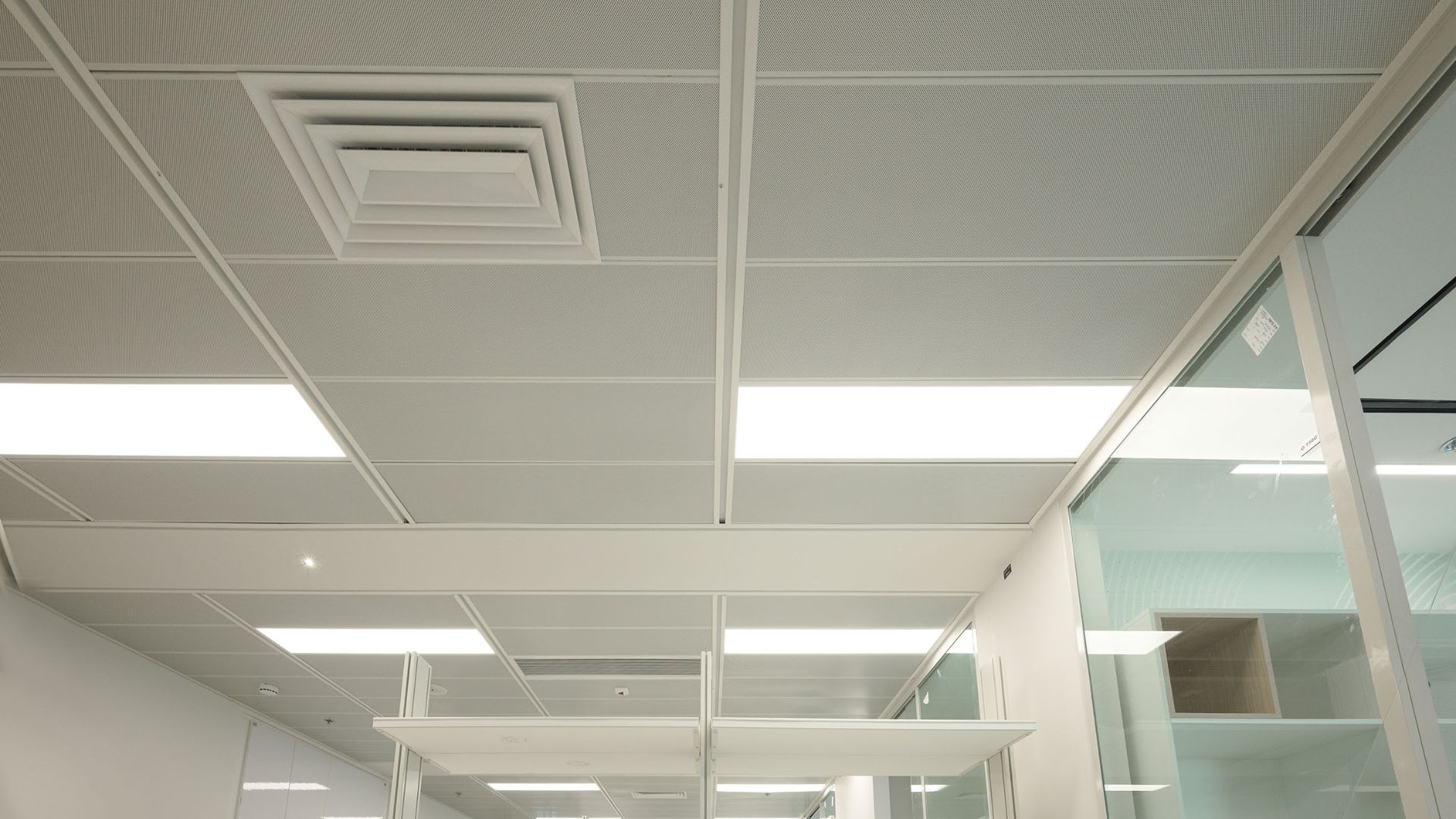
In the sterile rooms, a Drop-In metal ceiling was chosen that provides a clean, precise and easy-to-maintain solution. The standard size tiles of 61×61 cm are combined with Fine Line profiles according to the project requirements. Here too, combined with ROYALIN acoustic fleece, acoustic performance of up to NRC 0.8 is achieved, while maintaining a uniform and meticulous appearance suitable for medical environments.
Photo: Einat Dekel